Findings
Four findings, each supported by the data.
Finding 1 — Scores fell in every subject and grade
Between 2019 and 2024, the mean score fell in all four subject–grade combinations:
| Subject / grade | 2019 | 2024 | Change |
|---|---|---|---|
| Mathematics, grade 8 | 281.0 | 272.2 | −8.8 |
| Mathematics, grade 4 | 240.0 | 237.3 | −2.7 |
| Reading, grade 8 | 262.0 | 256.7 | −5.3 |
| Reading, grade 4 | 219.4 | 214.3 | −5.2 |
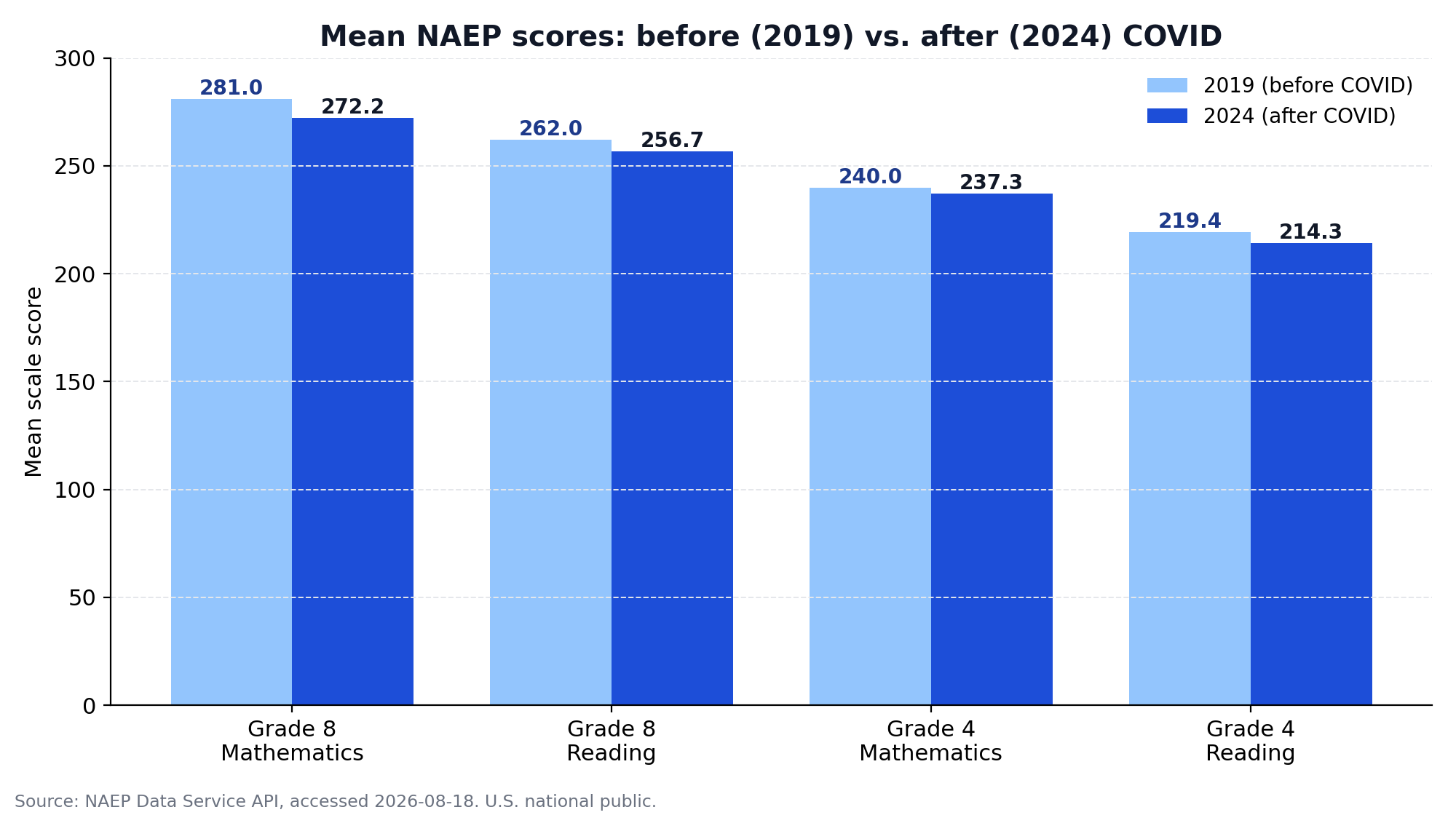
Why it matters. This is the direct answer to the research question: yes, scores were lower after COVID than before, across the board. A decline of 5–9 scale points is large by NAEP standards (roughly half a school year or more of typical learning).
Finding 2 — Reading kept falling while math recovered
The post-COVID trajectory differed sharply by subject. From 2022 to 2024, mathematics stabilized or recovered, while reading continued to decline:
| Subject / grade | 2022 → 2024 change |
|---|---|
| Mathematics, grade 4 | +2.4 |
| Mathematics, grade 8 | −0.9 |
| Reading, grade 4 | −1.8 |
| Reading, grade 8 | −2.4 |
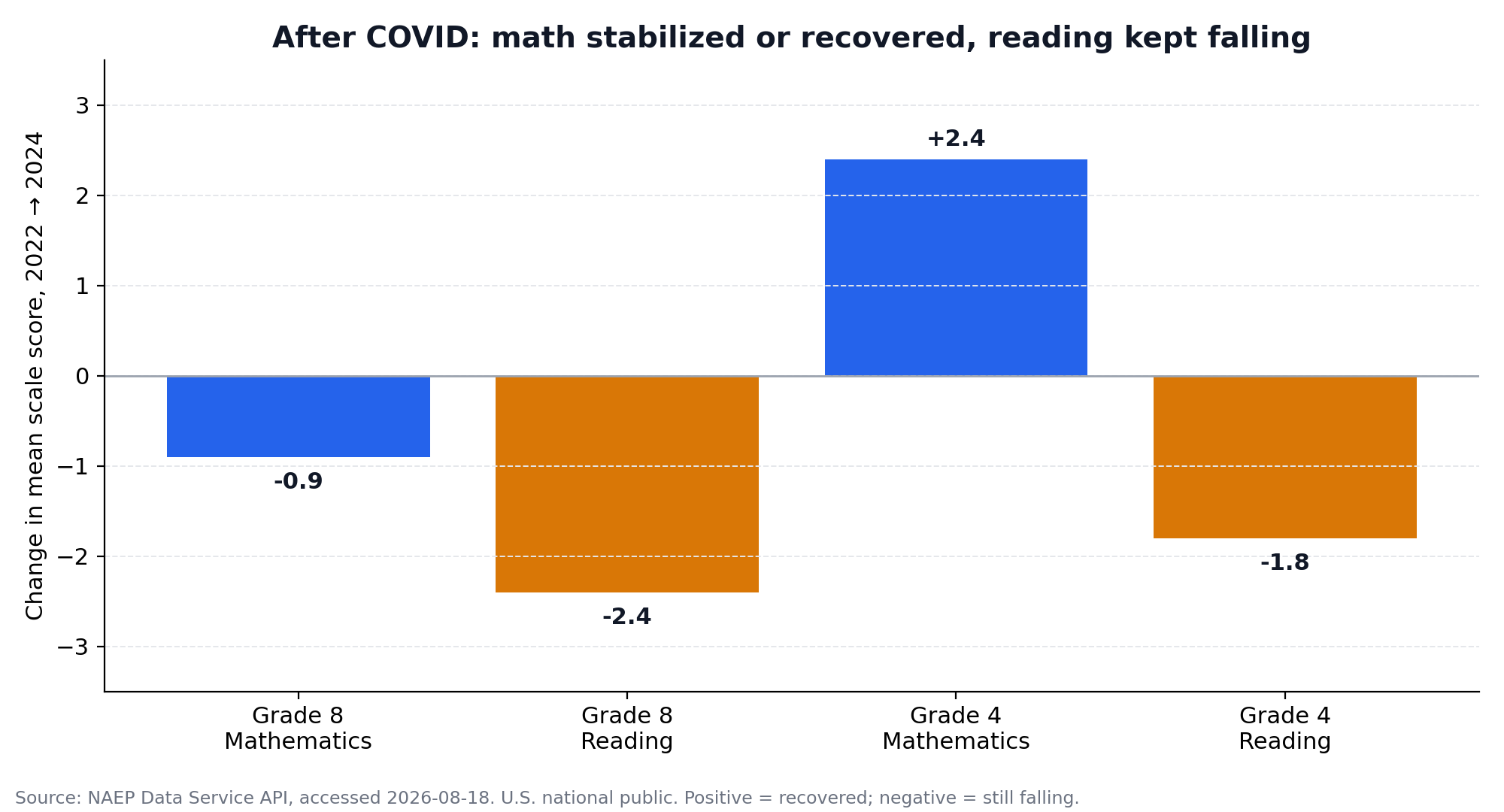
Why it matters. A one-time dip followed by recovery is a very different situation from a decline that is still underway. This finding says recovery has not been even across subjects — reading needs attention that math no longer appears to.
Finding 3 — The pandemic drop was largest in grade 8 math
The single biggest single-cycle change in the data was grade 8 mathematics, which fell 7.9 points from 2019 to 2022 — the largest drop of any subject and grade:
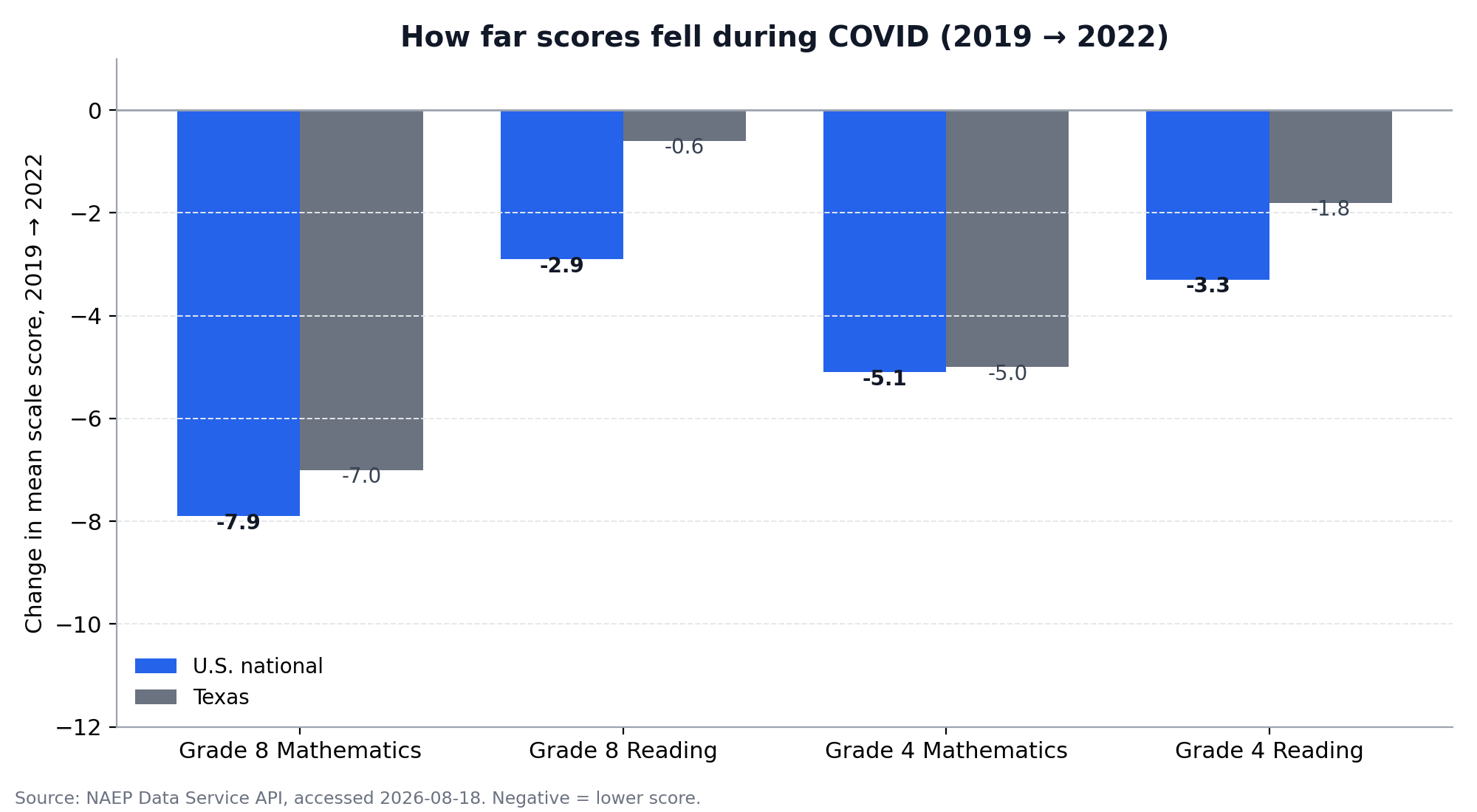
Why it matters. Grade 8 math is a critical gatekeeper for algebra and later STEM coursework. A drop this large, concentrated right at the transition to high school, matters for the students who lived through it.
Finding 4 — Texas is a different story
Texas was above the national average in grade 8 math in 2015 (+2.5 points) and is now below it (−2.8 points). Its decline also began earlier — Texas was already losing ground before COVID, while the nation was roughly flat.
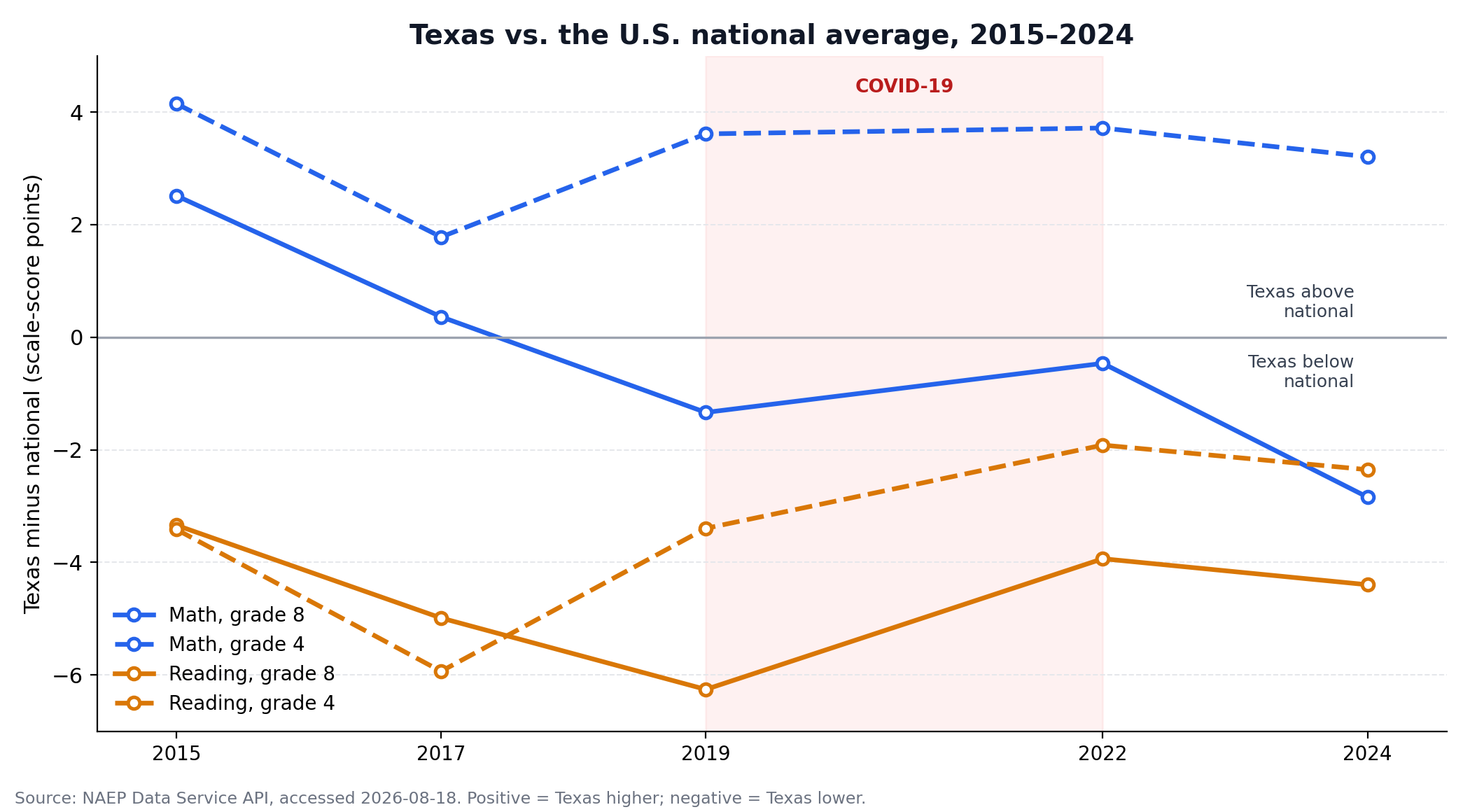
Why it matters. State averages hide this kind of divergence. A single national number would miss that Texas's slide started earlier and has been steeper, which points to state-level factors worth investigating. See the full comparison.